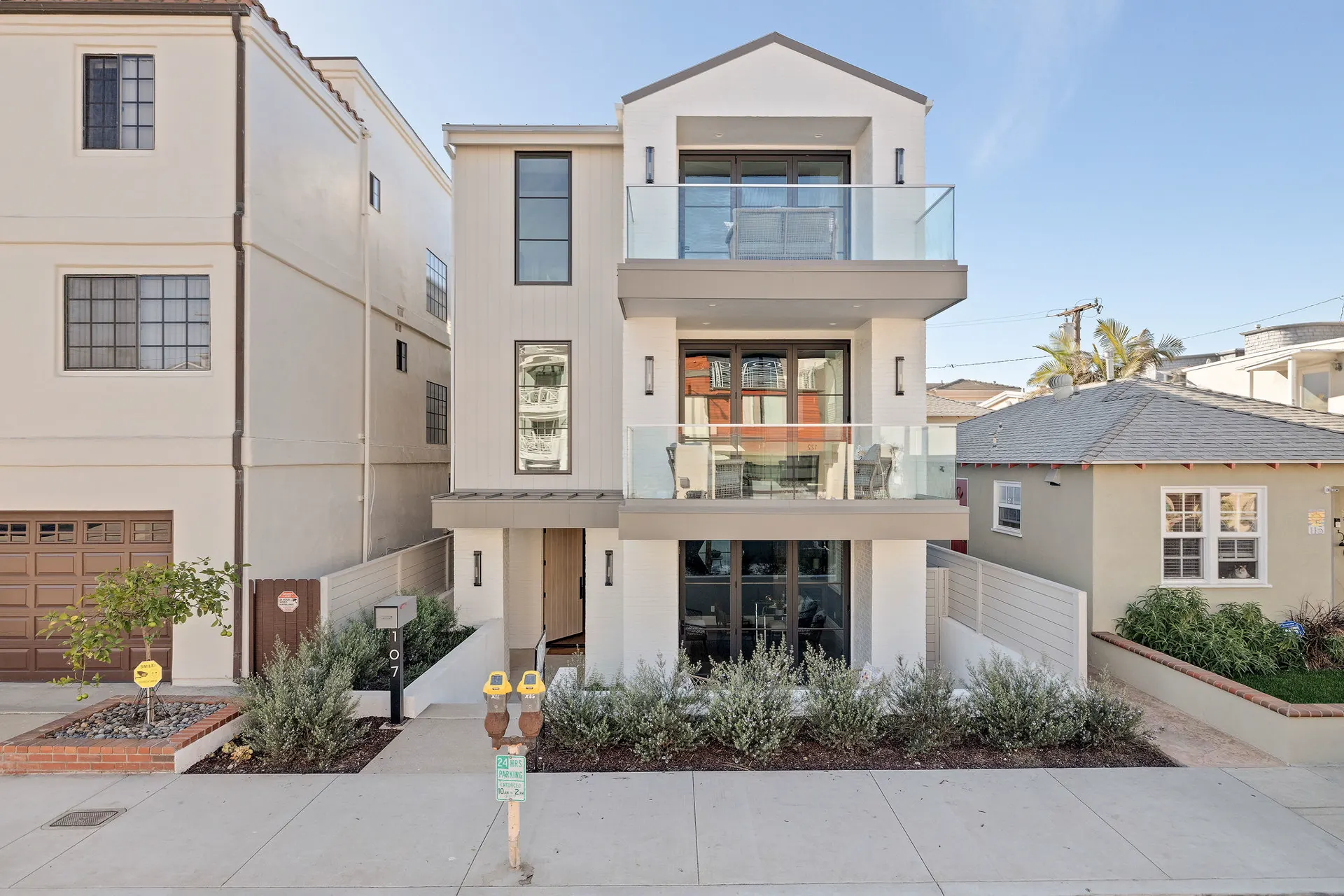
A fixed price contract sets one price before construction starts. A cost plus contract has you pay the actual cost of the work plus a stated fee. Neither is right for every owner. Fixed price gives you a number up front. Cost plus gives you visibility and room to change your mind. Levine Homes Real Estate and Construction builds cost plus, and this guide explains the tradeoffs and what to ask any custom home builder in the South Bay.
What a fixed price contract means
The builder quotes one price for a defined scope, based on the plans and specifications at the time of the bid. Where the plans leave a choice open, such as tile, lighting or plumbing fixtures, the contract carries an allowance, which is a budget placeholder. Anything outside the written scope becomes a change order.
Fixed price works best when the plans and selections are complete before the bid. You know the number, and the builder carries the risk of cost increases inside the scope. The risks sit in the details. Bids that look alike can cover different scopes. Allowances can be set low. Most fixed price bids also carry a contingency for unknowns, and you pay it whether or not the unknown shows up. Disputes tend to start over what the scope included.
What a cost plus contract means
You pay the actual cost of labor, materials and subcontractors, plus a fee. The fee can be a percentage of cost or a flat amount, and it should be written in the contract. The builder shows you the invoices behind the cost.
Cost plus works best when you want to see where every dollar goes, when selections will develop during the job, or when you want to set your own contingency instead of paying one inside a bid. You pay for the work that happens, not for a guess made before the permit.
Cost plus has real downsides. You do not know the final number until the end, so you need a budget and a builder who tracks it. A percentage fee rises when cost rises, so ask how the builder controls cost. The model depends on trust, which is why visibility matters.
Fixed price and cost plus side by side
| Fixed price | Cost plus | |
|---|---|---|
| Price known before construction | Yes, for the written scope | No. A budget, not a guarantee |
| Who carries cost risk inside the scope | Builder | Owner |
| Change orders | Priced as additions to the contract | Priced at actual cost plus the fee |
| Visibility into costs | Usually the schedule of values | Invoices and line items |
| Works best when | Plans and selections are complete | Selections develop during the build |
| Ask before signing | What the scope excludes. What the allowances cover | How the fee is set. How often you see costs |
How we run cost plus at Levine Homes Real Estate and Construction
- You see the costs. Every project runs in JobTread. You see vendor invoices, line items and a summary, along with daily logs with photos and the schedule. We update the budget about weekly, so you see where costs stand against the plan while there is still time to act.
- The fee is stated in the contract. You know it before you sign.
- Our own crews do much of the work. We have our own electricians and plumbers. Our crews also frequently do the foundation, finish carpentry, paint, door and window installation, low voltage and pickup framing. That work comes from our own labor, not a subcontractor’s bid.
- Change orders our crews perform are priced at our hourly rate plus materials. You see both in JobTread. Most changes get decided on site, not negotiated through a subcontractor.
- We finish the design package before construction starts. Late decisions cause most change orders, and cost plus does not remove the cost of a late decision. It only shows it to you.
- The owner is on site. Mike Levine is on site multiple times a week, so you deal with the licensed contractor.
Questions to ask any builder about the contract
- Is the contract fixed price, cost plus, or a hybrid?
- If it is cost plus, is the fee a percentage or a flat amount, and where is it written?
- Can I see every vendor invoice and line item while the job runs?
- How often is the budget updated?
- How are change orders priced, and who approves them before work starts?
- Which trades does the builder’s own crew perform?
- What does the contract say about allowances and what happens when a selection exceeds one?
What a custom home costs in the South Bay
Custom new construction in the South Bay runs about $550 to $1,300 per square foot. Finish level, lot size and slope, basement, pool and house style move a project through that range. Our guide to what it costs to build a custom home in the South Bay breaks down the drivers. The contract type changes how you see and manage the cost. It does not change what the house costs to build.
Frequently asked questions
What is the difference between cost plus and fixed price for a custom home?
A fixed price contract sets one price for a defined scope before construction starts. A cost plus contract has you pay the actual cost of the work plus a stated fee.
Is cost plus riskier for the homeowner?
The owner carries cost risk inside the scope, so you need a budget and a builder who tracks it. The tradeoff is visibility. You see the invoices and line items behind every cost.
Does Levine Homes build fixed price or cost plus?
We build cost plus. You see vendor invoices, line items and a summary in JobTread, and the fee is stated in the contract.
How does Levine Homes price change orders?
When our own crews perform a change order, we price it at our hourly rate plus materials. You see both in JobTread.
Can I see my costs while the house is being built?
Yes. We update the JobTread budget about weekly, and you see vendor invoices, line items and a summary.
Related reading: How to choose a custom home builder in the South Bay, How much does it cost to build a custom home in the South Bay, and How long does it take to build a custom home in Manhattan Beach.
Planning a custom home in Manhattan Beach or Hermosa Beach? Call Mike at (310) 796-9088 or schedule a consultation with us, and we will walk you through the contract and the timeline for your lot.
General information, not legal advice. Have a California attorney review any construction contract.