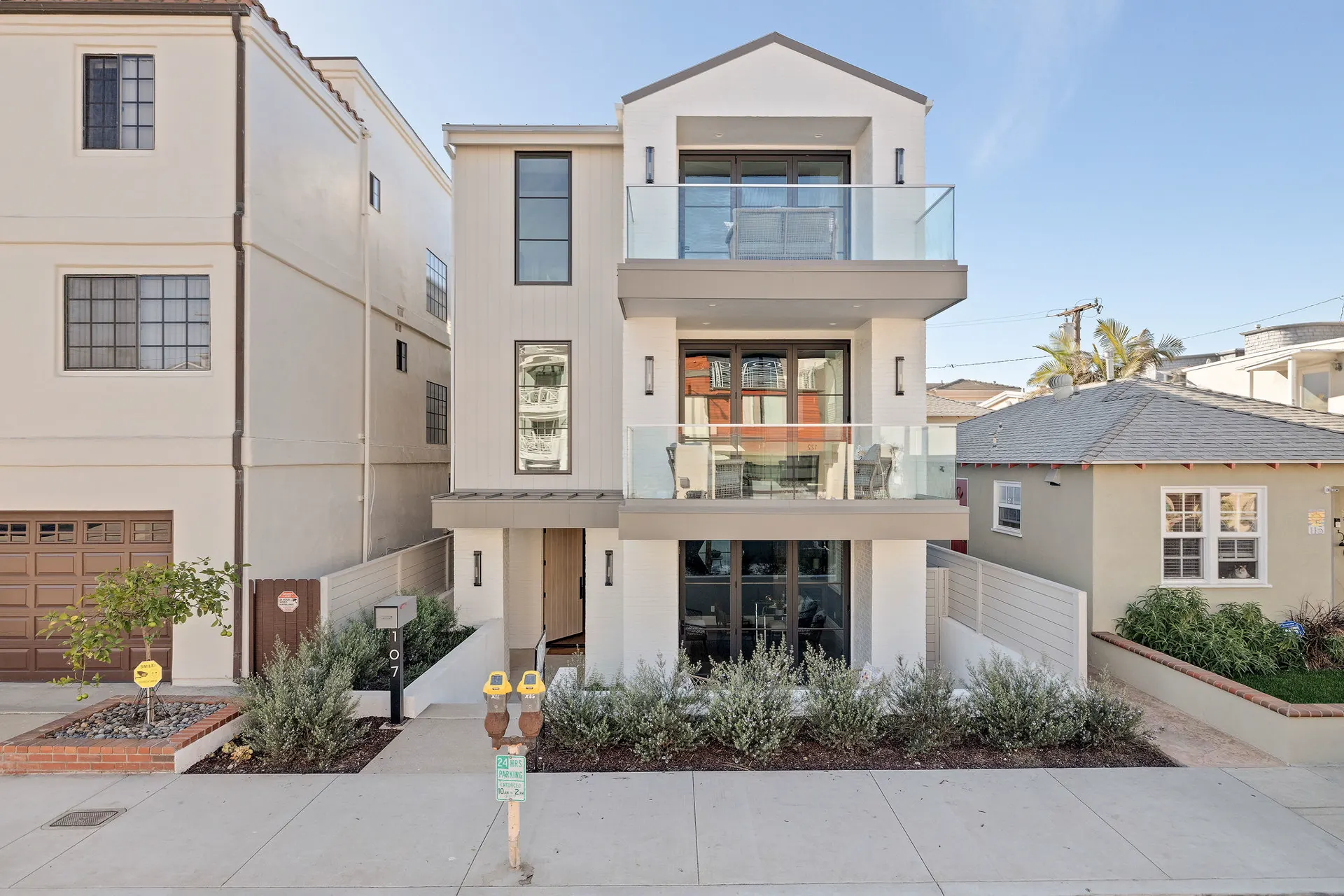
If you own a home in Hermosa Beach, Manhattan Beach, or Redondo Beach, salt air is working on your exterior every day. The damage is slow. Most owners notice it only when a railing bleeds rust or a sliding door starts to drag. By then the repair costs far more than the prevention would have.
This post covers what salt air does to an existing home and what a maintenance routine should include. If you are planning a new build, start with our guide to building a home that holds up to salt air.
How salt air damages a home exterior
Ocean air carries fine salt particles inland. They settle on every exterior surface. Salt pulls moisture out of the air, so coated surfaces stay damp longer. That damp salt film speeds up corrosion on metal and breaks down sealants, paint, and finishes.
Rain rinses exposed surfaces. Sheltered surfaces never get rinsed. That is why the worst corrosion often shows up under eaves, under balconies, behind downspouts, and on the side of the house that faces the ocean breeze.
Exposure drops as you move inland, but it does not stop at a single street. A home a few blocks from the sand takes far more abuse than one near Sepulveda. Both need a plan.
What fails first
Metal railings, fasteners, and hardware
Plain steel and standard galvanized metal rust fastest. Look for rust streaks running down stucco below railings and light fixtures. Look for bubbled paint on steel posts. Hinges, latches, and exposed screws on gates and fences usually go early.
Windows and doors
Tracks, rollers, hinges, and locks corrode before frames do. A slider that gets harder to open each year usually has corroded rollers and a salt-packed track. Sealant around the frame dries out and cracks, and that lets water in behind the finish.
Stucco, siding, and paint
Paint chalks and fades faster near the water. Hairline cracks in stucco let moisture and salt reach the lath behind it. Wood siding and trim lose their finish, then start to check and split. Once the paint fails, the material underneath breaks down quickly.
AC condensers and outdoor equipment
Outdoor AC condensers use thin aluminum fins. Salt corrodes them and cuts efficiency. Pool equipment, exterior light fixtures, garage door hardware, and hose bibs follow the same pattern. Our quarterly HVAC maintenance guide covers what to check on the mechanical side.
Roof flashing and gutters
Flashing and gutter fasteners corrode where you cannot see them. A failed flashing joint often shows up first as a stain on an interior ceiling.
Signs your exterior needs attention
- Orange or brown streaks on stucco or siding
- Paint that comes off as powder when you rub it
- Bubbling or flaking paint on metal railings and posts
- Sliding doors or windows that drag or stick
- Cracked or shrinking caulk at windows, doors, and wall penetrations
- Green or white crust on light fixtures, hose bibs, or door hardware
- An outdoor AC unit that runs louder or cools less than it used to
How to slow salt air damage
You cannot stop salt air. You can slow the damage enough to push major repairs out by years.
Rinse the exterior
Rinse sheltered surfaces with fresh water on a regular schedule. Focus on the places rain does not reach: under eaves and balconies, window and door frames, railings, and outdoor equipment. Use low pressure. A pressure washer can force water past seals and damage stucco and wood.
Clean and lubricate moving parts
Vacuum and wipe out window and door tracks. Lubricate rollers, hinges, and locks with a product the manufacturer approves. Do the same for gate and garage door hardware.
Keep sealants and paint intact
Inspect caulk at windows, doors, and every penetration at least once a year. Replace it when it cracks or pulls away. Touch up chips in the paint on metal before rust spreads under the coating. Plan full repaints on a shorter cycle than an inland home would need.
Upgrade metal when it fails
When a fastener, hinge, or fixture fails, replace it with stainless steel or another product rated for marine exposure. A like-for-like swap with standard steel will fail again on the same schedule.
Protect outdoor equipment
Rinse AC condenser coils gently and keep plants and debris clear of the unit. For a unit close to the water, ask your HVAC technician about a protective coil coating.

How often should you check?
Inspect the full exterior at least twice a year. Homes within a few blocks of the beach benefit from a quarterly check. Pick a schedule and keep it. The value comes from catching small failures before they spread into stucco, framing, or interior finishes.
Let us handle it with the Levine Homes Care Plan
Many South Bay owners travel often or own a second home here. They do not have time to rinse railings, check caulk, and track every small repair. The Levine Homes Care Plan covers that work. Our team visits every quarter, inspects the interior, exterior, and the home's systems, handles routine maintenance, and flags repairs before they turn into bigger jobs.
Levine Homes Real Estate and Construction builds and remodels homes in Manhattan Beach, Hermosa Beach, and Redondo Beach. We know how these homes age, and we plan maintenance around it.
Protect your home in Manhattan Beach, Hermosa Beach, or Redondo Beach
Contact Levine Homes Real Estate and Construction to set up a Care Plan or schedule an exterior inspection. If the damage has gone past maintenance, see our home remodeling services in Manhattan Beach, Hermosa Beach, and Redondo Beach.