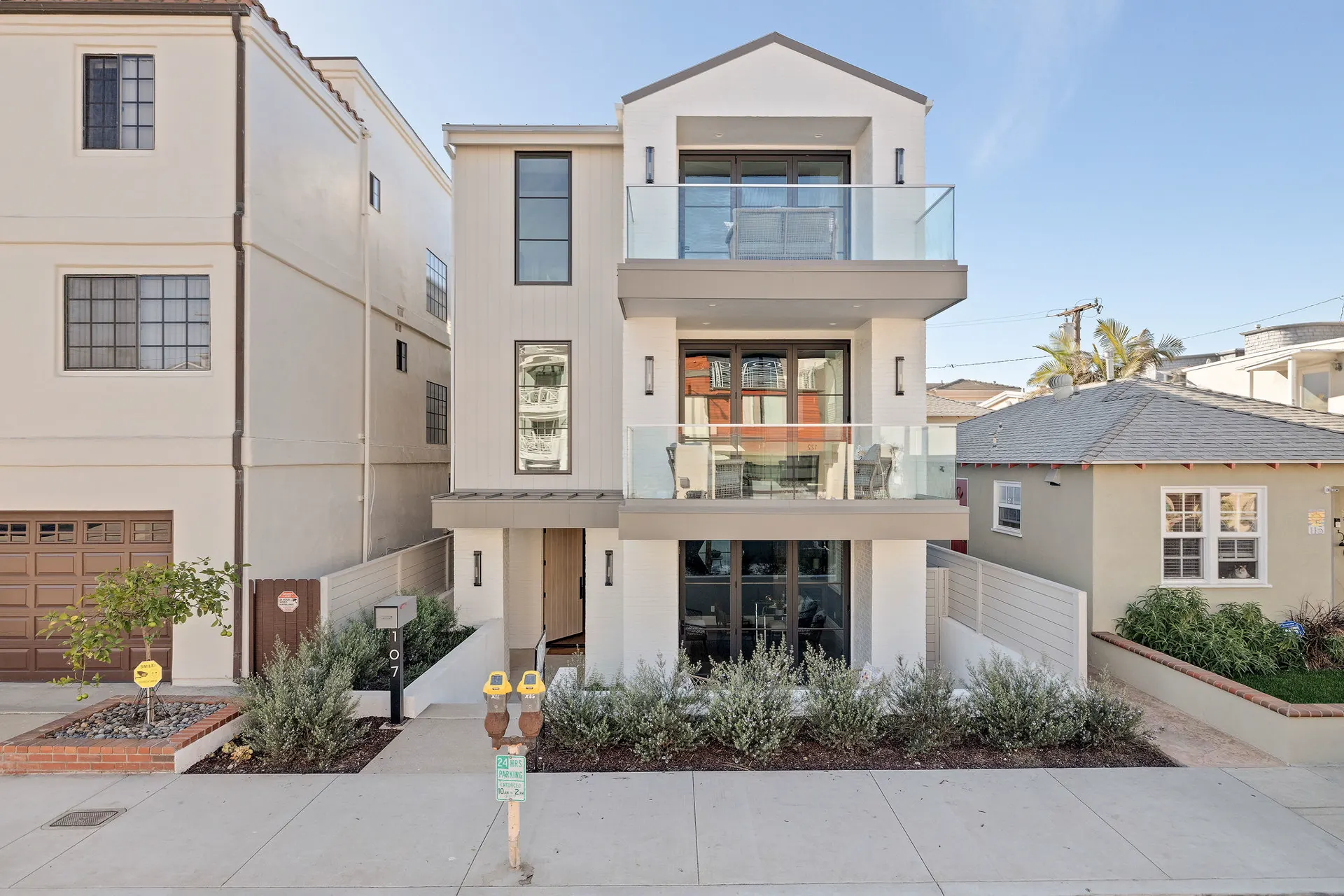
Most HVAC problems we see in Manhattan Beach, Hermosa Beach, and Redondo Beach homes trace back to skipped maintenance, not bad equipment. A coastal system runs fewer hours than one inland, so homeowners forget about it. Meanwhile, salt air works on the outdoor unit year round.
This is the schedule Levine Homes Real Estate and Construction uses on the homes we build and maintain. It breaks down into quarterly, seasonal, and yearly tasks.
Every Quarter
Change the HVAC filter. A clogged filter makes the blower work harder, cuts airflow, and sends dust back into the house. In a home near the beach with windows open much of the year, filters load up faster than the package suggests. We change them every quarter.
Clean the whole house fan filters. Many newer South Bay homes use a whole house fan to pull in cool ocean air in the evening instead of running the AC. Those filters catch sand, pollen, and salt residue. Clean them every quarter so the fan keeps moving air.
Check carbon monoxide levels. If your system includes a gas furnace, test for carbon monoxide near the unit and in the main living areas each quarter. Confirm your CO detectors work at the same time. A cracked heat exchanger is rare, but it is the one HVAC failure that is a safety issue rather than a comfort issue.
Each Season
Test the thermostat and reprogram it. Coastal homes switch between light heating in winter and light cooling in late summer. Reset the schedule at each change of season so the system is not heating on a warm October afternoon or cooling at night when the ocean breeze would do the job for free.
Once a Year
Rinse the condenser coils in spring. The outdoor unit is where salt air does its damage. Salt and grime build up on the coil fins, trap moisture, and speed up corrosion. Each spring, shut off power to the unit and gently rinse the coils with a garden hose from the inside out. Never use a pressure washer. It bends the fins and pushes debris deeper.
Test system performance with a thermal gun. Once a year we check the temperature of the air coming out of the supply registers against the air going into the return. On cooling, a healthy system usually shows a drop of roughly 15 to 20 degrees. A much smaller difference points to low refrigerant, a dirty coil, or an airflow problem worth having a licensed HVAC contractor look at before summer.
Why This Matters More Near the Beach
Inland, an air conditioner fails from heavy use. Here, it is more likely to fail from corrosion and neglect. A corroded condenser coil can mean replacing the outdoor unit years early. Fifteen minutes each quarter is cheap insurance.
The same thinking applies to the whole house. Salt air affects windows, exterior metal, and siding too. We cover that in Building a Home That Holds Up to Salt Air in the South Bay.
Want Someone Else to Handle It?
If you would rather not track filters and coil rinses yourself, our Home Care Plan covers HVAC along with plumbing, appliance, and exterior maintenance on a set schedule. Call (310) 796-9088 to talk through it.
Planning a larger renovation? See our remodeling work.