R-value measures how well a material resists heat flow. The higher the number, the better it insulates. You will see it printed on insulation batts, rigid foam boards, and window and wall assemblies.
What most articles leave out is that the right amount of insulation depends heavily on where you live. In the coastal South Bay, the answer is different than it is in the Inland Empire or the high desert.
How R-Value Works
Insulation slows heat moving from the warm side of a wall, floor, or ceiling to the cool side. A wall rated R-21 resists heat flow better than one rated R-13. Two things affect real-world performance more than the label suggests:
- Installation quality. Gaps, compressed batts, and missing insulation at corners and around outlets cut the effective R-value of a wall.
- Thermal bridging. Wood studs conduct heat far better than insulation, so the studs themselves leak heat through an otherwise well insulated wall.
California Sets Requirements by Climate Zone
California’s energy code, Title 24, divides the state into 16 building climate zones. Each zone has its own minimum requirements for insulation, windows, and mechanical systems, based on how hot and cold that area gets.
The coastal South Bay sits in Climate Zone 6, the zone the state represents with Torrance. It is one of the mildest climate zones in California. Ocean air keeps summers cool and winters warm, and many homes here go most of the year with little heating or cooling at all.
Why R-Value Matters Less for Us, and Where It Still Counts
Two things make insulation less important here than in neighboring inland cities like Hawthorne, Lawndale, or Gardena.
It does not get as hot. The ocean keeps beach-city summers cooler than they are even a few miles inland. Fewer hot days means less heat for insulation to keep out, and less air conditioning to save on.
We live with the house open. Life by the beach means doors and windows open much of the year to let the ocean breeze through. When the house is open, the insulation in the walls is not doing much. A home inland stays closed up and relies on insulation and air conditioning to stay comfortable. Ours relies on the breeze.
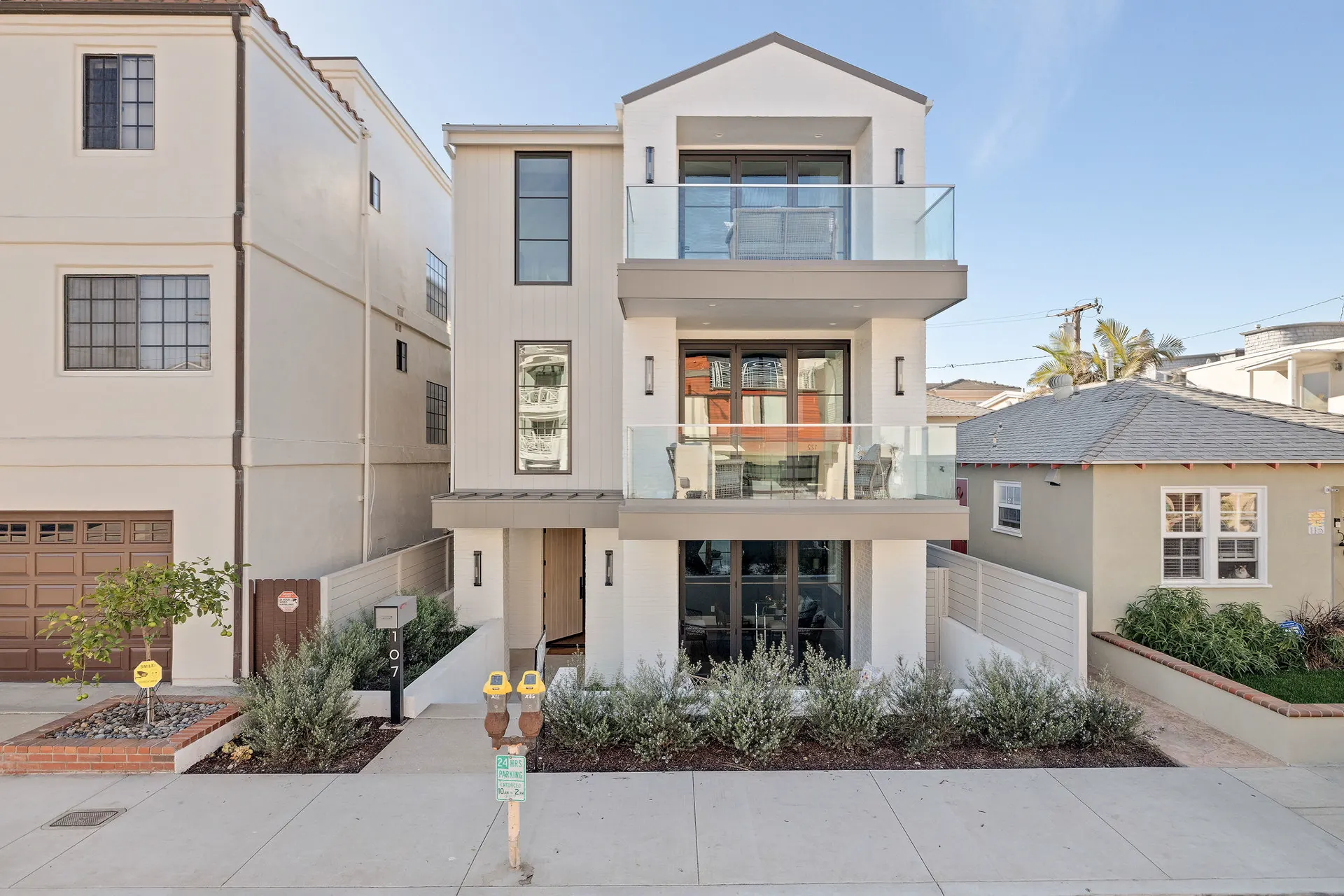
That is why the difference between a good and a great R-value saves far less energy in Manhattan Beach or Hermosa Beach than it would inland. Every home we build meets Title 24 for its zone, but we do not chase insulation numbers well beyond code. The return just is not there here.
That said, insulation still earns its place in a few spots:
- The roof and attic. Roof decks and rooftop decks take direct sun. Good insulation above the top floor keeps upstairs bedrooms comfortable on the few hot days we get.
- Sound control. On tight South Bay lots with neighbors a few feet away, insulation in exterior and interior walls matters as much for quiet as it does for temperature.
- Air sealing. In a mild climate, stopping drafts and moisture usually does more for comfort than adding R-value. That is a big part of why we use ZIP System sheathing on every new build since 2021.
The Takeaway
If you are building or remodeling near the beach, put your budget into a tight, well detailed building envelope first, and meet code on insulation. If you are buying, a coastal home with average insulation is rarely a reason to walk away. Water intrusion and air leaks are far bigger concerns here.
Questions about a build or remodel? Levine Homes Real Estate and Construction is a licensed general contractor and real estate broker serving the South Bay. Call (310) 796-9088.
See how we insulate and seal the custom homes we build.